- Jul 31, 2025
- News
A-Frame Gantry Crane: Types, Uses, and Purchasing
Discover the ins and outs of A-Frame gantry cranes! Learn about different types, their uses, and tips for purchasing the perfect one for your needs. Get started today!
An A-Frame gantry crane (also called a portable or shop gantry crane) is a freestanding lifting system with an A-shaped frame supporting a horizontal beam. These cranes are often made of steel or lightweight aluminum, with many models offering adjustable height or span. Capacities range from a few hundred kilograms (for mini or garage gantries) up to dozens of tons. For example, aluminum A-Frame cranes commonly handle up to 5 tons, while heavy-duty steel versions can exceed 50 tons. Because they rest on the floor, A-Frame cranes can be installed where overhead support isn't available. They provide a portable alternative to bridge cranes, making them popular in workshops, construction sites, and ports.
Types of A-Frame Gantry Cranes
A-frame gantry cranes are differentiated by their inverted "A" shape, an open throat for easy load placement, and the ability to alter capacity, span, and height to match individual application needs. Whether you need a simple, low-capacity device for occasional lifts or a rugged, heavy-duty system for continuous operation in hostile environments, an A-Frame design can balance strength, mobility, and affordability. To maintain clarity, each of the primary variations is discussed in its own paragraph.
Single-girder A-Frame cranes feature one primary beam supported by two A-shaped legs. Their straightforward design keeps costs down and makes installation quick and easy. Typically rated for 1 to 20 tons, these cranes use a chain hoist or electric wire rope hoist that travels along the underside of the beam. Because the hoist sits below the main girder, the overall lift height is limited by the beam depth, but this setup is perfectly adequate for machine shops, small fabrication shops, and repair garages handling medium-duty tasks. Maintenance is minimal—greasing the end trucks and inspecting the beam for wear are usually all that's required. Single-girder units can be fitted with end stops, beam encoders for precise positioning, and dust-tight wire rope hoists for environments where cleanliness is paramount.

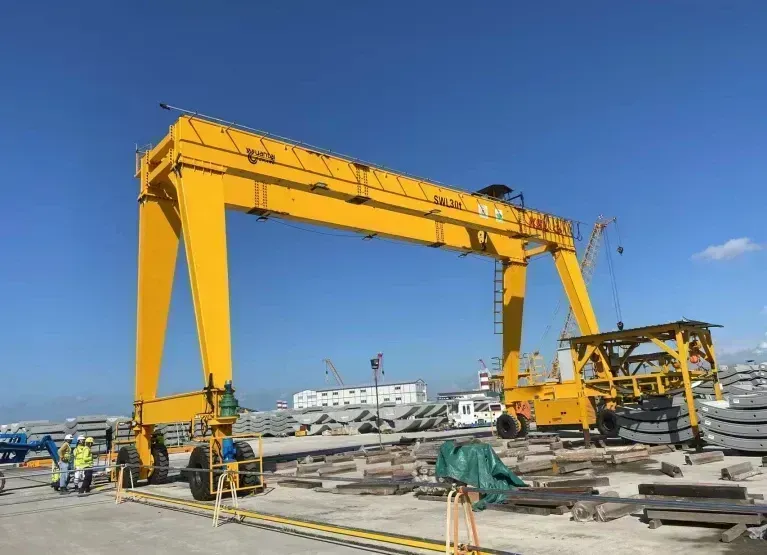
For heavier loads and longer spans, double-girder A-Frame cranes employ two parallel girders, creating a stiffer, more stable structure. The hoist trolley rides on top of the girders, maximizing available lift height and allowing the hook to come closer to the crane's underside. Capacities range from 10 up to 100 tons or more, with spans exceeding 30 meters in large installations. These cranes are the workhorses of shipyards, steel mills, and outdoor yards—where wind-resistant rail clamps, wind tunnel testing, and corrosion-resistant paint systems ensure safety and durability. Advanced models include variable-frequency drives for smooth acceleration, load-sway control options, and integrated safety PLCs that monitor overload and travel limits.
When flexibility is key, portable A-Frame cranes on casters allow you to bring the lifting equipment directly to the workpiece. Lightweight aluminum or steel frames bolt together in minutes and lock into place using pin-and-hole assemblies. Most portable cranes use heavy-duty swivel wheels with foot-operated brakes, enabling 360° rotation or straight-line travel as needed. Typical capacities range from ½ ton to 5 tons, with beam lengths from 3 to 6 meters. Manufacturers comply with OSHA and ANSI standards by including toe guards on legs, pause-brake wheels, and clearly marked safe working load (SWL) labels.


The Battery‑Powered A‑Frame Crane is a mobile gantry crane powered by built‑in lithium‑ion batteries, offering untethered operation ideal for outdoor sites or facilities lacking nearby power access. It features 360° swivel casters for full maneuverability and dual-speed hoisting—with inching mode for precise load placement. The crane runs continuously for 6–8 hours per charge and includes LED displays for battery level, load weight, and safety alerts. With adjustable span and height ranges, plus a modular, tool‑free configuration, this crane adapts easily to different workflows. Integrated safety systems—automatic brakes on overload or instability and visual indicators—help prevent accidents and ensure reliable performance in diverse settings.
A-Frame Gantry Crane Capacities and Use Cases
A-frame gantry cranes are simple, strong, and versatile lifting systems. They pair a rigid A-shaped frame with a horizontal beam to move loads safely. Capacity drives their design, transport, and costs. Match crane size to the weight, frequency, and working environment of your lifts. Choosing the right capacity reduces downtime and keeps operators safe. Think about mobility, site clearance, lifting height, and inspection needs when you compare models.
1. 1–2 Ton Gantries
Light-duty 1–2 ton gantries are built for frequent, small-to-moderate lifts in tight spaces. Many are aluminum and weigh little themselves so a small crew can move and set them up. They usually have a single girder and accept hand-chain or small electric hoists. Buyers like them for engine swaps, machine maintenance, and workshop assembly because they save time without a full overhead system. Look for adjustable beam spans, lockable casters, and clear load charts to make sure the unit fits both the load and the floor where it will be used.
2. 5 Ton Gantries
Five-ton gantries sit in the middle of the range and balance strength with portability. They can be portable or semi-permanent and often use heavier chain hoists or compact electric hoists for faster cycle work. You'll see them in warehouses, ports, and light fabrication yards where loads are larger but still need flexibility. When selecting a 5-ton unit, check the duty cycle rating, the travel system (wheels versus rail), and how easily the gantry breaks down for transport to avoid surprises during frequent moves.
3. 10–20+ Ton Gantries
Cranes rated 10–20 tons move into true heavy-duty territory and are usually steel framed with thicker sections and sometimes double girders. These units give high clearance and long spans so they can lift beams, concrete elements, and heavy plant equipment. They are often assembled on site and can be relocated as a job moves along, but they need planning: foundations, rigging crews, and sometimes temporary road access. Inspect load charts, deflection limits, and control systems because those details affect safe operation and long-term durability.
4. Extreme Capacities
Gantry cranes of 50 tons and above are engineered for major projects and continuous heavy work. They typically use box-beam or double-beam construction and multiple hoists or synchronized lifting systems. Expect engineered foundations, detailed lift plans, and specialist maintenance. These cranes are common in shipyards, large ports, and heavy manufacturing where single lifts exceed what small cranes can handle. For a purchase at this scale, focus on certified load testing, spare-parts support, and vendor experience with projects like yours.
Design and Construction of A-Frame Gantry Cranes
A-frame gantry cranes are simple, reliable lifting solutions. These cranes work well in workshops, maintenance bays, yards, and light industrial sites.


1. Material
Steel and aluminum each solve different buyer problems. Steel gives far higher strength and stiffness, so it suits heavy lifts, long spans, and continuous industrial use. It is heavier and usually less easy to move, but it tolerates bending fatigue and wears well under repeated lifting cycles. Steel parts are commonly painted, primed, or hot-dip galvanized to resist corrosion; they are also easier to repair by welding if damaged. Aluminum wins on portability and corrosion resistance. Anodized high-strength alloys reduce upkeep in wet or salty environments and let a small crew reposition the gantry by hand. Aluminum does deflect more under load; that visible bend can help detect overloads, but it also limits peak capacity and long-term stiffness. Cost and lifecycle matters too: aluminum units often cost more per pound but save on handling and corrosion maintenance, while steel units typically cost less up front for the same rated capacity.
2. Customizable Span and Height
Modern gantries are often modular so buyers can adapt them to changing needs. Telescoping beams, bolt-together sections, and adjustable leg kits let you tune span and headroom without permanent welding. Some suppliers offer kits that slide open or lock at set widths, and winch or jack kits that raise an I-beam on fixed frames to add a few feet of lift height. When ordering, measure clearances where the crane will operate and specify any obstacles such as overhead lighting or door frames. A good vendor will provide capacity charts for every configuration and advise on splice strength, bolt torque, and the effect of added extensions on safe working load. For unusual sites, manufacturers can tailor leg spacing, clearance for trucks, or interchangeable components to fit ramps and uneven ground.
3. Compact vs. Full-Size
Compact gantries use L-shaped or three-leg “walking” frames to fit under low headroom or inside tight bays. Full A-frames give better lateral stability and higher rated capacities for larger lifts. When headroom is tight, semi-gantry or cantilevered beams can keep the load clear of the floor while minimizing overall height. Regardless of style, fabrication quality matters: correct weld procedures, dimensional accuracy, and post-weld inspection keep the beam straight and the joints durable. Also confirm that the maker follows relevant codes and that each model's clearances and ground contact are suited to your site and storage needs.
4. Mobility
Mobility options change how and where you use the crane. Light portable gantries use heavy-duty swivel casters that lock for travel or turn on the spot. Larger mobile gantries may use powered bogies with rubber tires for outdoor yards or rough concrete. Some systems offer multi-position wheels that lock for straight travel or rotate for tight steering, while advanced motorized units can move forward, sideways, or pivot in place for precise placement. Consider floor type: hard wheels can damage finished floors, and soft wheels may struggle on rough surfaces. Look for reliable brakes, wheel locks, and rated travel speeds. Importantly, check whether the manufacturer rates the gantry to be moved with a suspended load; many are not and must be locked down or chocked before lifting.
5. Aluminum A-Frame gantry crane
Aluminum models provide easy assembly and low maintenance for moderate loads. High-strength alloy tubing, often anodized, keeps weight down and resists corrosion. Chain hoists or lever hoists pair well with aluminum beams for simple, cost-effective lifting. The trade-off is deflection and lower ultimate capacity compared with steel—so aluminum is best where portability and corrosion resistance matter more than maximum rating. Inspect connections and fasteners carefully on aluminum frames; they rely on precise torque and locking hardware rather than heavy welding. For buyers, aluminum is ideal for frequent moves, marine or outdoor use, and light to medium lifting tasks; choose steel if you need higher capacity, greater stiffness, or heavy continuous operation.
Applications of A-Frame Gantry Cranes
A-Frame gantry cranes are simple but versatile lifting frames you can set up where you need them. They bridge the gap when a permanent overhead crane is not practical. Buyers choose them for portability, adjustability, and clear lift capacity. Pick the right capacity, span, height, hoist type, and duty rating first. Check how easy the crane is to move, assemble, and store. Confirm load tests and safety certifications before you buy.


1. Workshops and Maintenance
In workshops and maintenance bays, portable A-Frame gantries let technicians lift engines, gearboxes, and other heavy modules close to the work area. They often come with casters or skates so crews can roll the gantry between workstations. Buyers should look for adjustable leg height and span, clear lifting height for the task, and a hoist rated for frequent starts and stops. Also check floor loading, ease of breakdown for storage, and whether spare parts and inspection records are readily available.
2. Manufacturing and Warehouses
On production floors and in warehouses, A-Frame gantries move assemblies, dies, and large components when overhead runway systems aren't installed. They work well for repeat lifts and for temporary assembly stations. Choose frame stiffness and wheel or rail options to match travel needs. Confirm how the gantry integrates with fixtures, pallet flows, and any required safety interlocks.
3. Construction and Outdoor Sites
At construction sites and outdoor maintenance jobs, A-Frame gantries offer quick setup and fast teardown between jobs. They break down into transportable sections and bolt together without complex foundations. Look for corrosion-resistant finishes, secure anchoring or ballast arrangements, and rated wind loading for the job site. Buyers should also consider transport package size, crane erection time, and how the gantry handles uneven ground or temporary cribbing.
4. Ports and Shipyards
Heavy-duty A-Frame gantries in ports and shipyards often run on rails and handle very large loads like containers or hull sections. These frames have wide spans, high lifting capacities, and robust foundations or ballast systems to control sway. When buying for port use, confirm rail gauge compatibility, spreader or slinging options, and lifting gear certifications. Also verify planned maintenance access, spare part availability, and the gantry's expected duty life in a corrosive, high-cycle environment.
5. Specialized Uses
For aircraft hangars, power plants, and event rigging, A-Frame gantries fill niche needs where precise, temporary lift points are required. They support delicate repositioning of components, allow use of specialized lift fixtures, and can be fitted with soft-start hoists or remote controls for fine control. Buyers should confirm attachment compatibility, control features, electrical and noise constraints, and the inspection schedule needed for safety-critical lifts.
Technical and Safety Considerations
Understanding the technical and safety considerations regarding A-Cranes will help you purchase the right lifting equipment.
1. Setup
Place the gantry on a firm, level surface and confirm the floor can carry the wheel or outrigger loads. Lock outriggers or leg braces and engage wheel brakes; if the model has adjustable spans, set both ends to the same width and insert pins or bolts that are correctly torqued. Check beam straightness and welds before first use and re-check after any move. For outdoor use, plan anchors or ballast and protect steel from corrosion. When buying, ask the manufacturer for recommended mounting details and a site checklist so installers and safety staff have clear instructions.
2. Rigging
Always use slings, shackles, and hardware sized for your rated load and follow sling angle limits to avoid increasing load on the hoist. Inspect slings, hooks, and the hoist chain or cable before each use for wear, deformation, kinks, or corrosion, and remove any damaged gear from service. Center the crane hook over the load and use spreader bars or balance beams when lifting long or flexible loads to prevent side loading.
3. Overload Protection
Overload limiters prevent hoisting when the tension exceeds the rated capacity and they are essential to avoid cable failure or frame damage. These devices can be mechanical or electronic and should come factory-set to the crane's working load limit; do not bypass or defeat them. When comparing models, favor units with visible capacity plates and built-in load detection or optional strain-gauges so you can document safe operation.
4. Limit Switches
Upper and lower limit switches stop the hook before it reaches unsafe travel extremes. These switches cut power at preset travel points and reduce the chance of run-out or hook damage. Verify they are accessible for inspection and that adjustment procedures are simple and documented.
5. Controls
Controls should be intuitive and safe; pendant or wireless remotes are common for smaller A-Frame cranes. Ensure emergency stop functions work and that remotes include a clear dead-man or hold-to-run feature where required. For motorized cranes, confirm electrical requirements — voltage, phase, and recommended starter protection — and insist on phase-loss and thermal overload protection to prevent motor burnout.
6. Standards Compliance
Buy cranes built to recognized standards and get documentation. In the U.S., check for compliance with OSHA 1910.179 and ANSI B30.17; ask for manufacturer quality certifications such as ISO 9001 and any regional marks like CE if you import from Europe. Request load test certificates, material traceability, and the operator and maintenance manuals. A reputable seller will provide inspection intervals, test records, and a clear warranty and service plan.
A-Frame Gantry Crane vs. Overhead Bridge Crane
When comparing an A-Frame gantry crane to an overhead bridge crane, it helps to understand how each one supports different types of workflows. Both cranes are reliable lifting systems, but they are built for different environments and lifting styles. If you are thinking about buying a crane, this comparison can help you choose the right option based on your building layout, workflow flexibility, and long-term lifting plans.
1. Structure
An A-Frame gantry crane uses a self-supporting structure. The vertical legs form a stable frame and connect to wheels or rails on the floor, allowing the beam to carry the load without relying on the building. This makes it a freestanding system. In contrast, an overhead bridge crane has a bridge beam supported by end trucks running along mounted runways. These runways are attached to the building columns or structure. Because of this setup, the overhead crane stays fixed to its track, while the A-Frame moves freely on the ground. If your building already has strong steel support columns, adding an overhead runway can be straightforward. If not, the A-Frame becomes appealing because it does not require building modifications.
2. Mobility
Mobility is often one of the biggest deciding factors. Gantry cranes can move to different locations within the same facility or even outdoors, depending on the wheel system and design. A movable A-Frame gantry can follow the work instead of requiring the load to be brought to the crane. Meanwhile, an overhead bridge crane operates strictly along its runway and does not change location. If your workflow changes often or if equipment layouts are temporary, the gantry crane provides more flexibility. If you have a consistent production line where loads move along the same path, an overhead crane may offer smoother and faster handling.
3. Cost
Cost plays a major role when selecting between the two. A-Frame gantry cranes usually cost less because they do not need structural reinforcements or runway installation. They are easier and faster to set up, and they can be relocated if the business moves or expands. The trade-off is that gantries may have shorter travel lengths and may take up floor space. Overhead cranes often cost more up front because they require runway beams, installation labor, and sometimes building upgrades.
4. Applications
Both cranes are effective, but their best use cases are different. An overhead bridge crane is ideal when you need full coverage of a production area and you have a permanent workspace with strong structural support. These systems are common in manufacturing plants, metal fabrication shops, and other facilities where lifting happens all day in the same working zone. An A-Frame gantry crane is better when mobility is essential or when installing a bridge crane isn't possible. This includes open yards, outdoor repair work, temporary job sites, and rented buildings where permanent structures cannot be modified.
Buying Guide: Specifications, Suppliers, and Costs
Choosing a suitable A Gantry Crane can be initially overwhelming as you need to consider various specifications, suppliers, and prices. When considering the purchase of a crane, you need to take into account practicalities such as workspace layout, maintenance needs, and usage requirements. A well-chosen crane not only improves efficiency and workflow but also helps reduce accidents and unplanned downtime.
1. Load Capacity and Duty Cycle
Start by identifying the heaviest load you expect to lift, including all rigging gear such as slings, shackles, and spreader bars. It's helpful to consider your future needs as well, because workloads sometimes increase as production grows. Gantry cranes are designed for specific duty cycles, meaning how often and how long they will operate during a shift. A crane used a few times a day for light woodworking parts will require a lower duty class than a crane used all day in a steel fabrication shop. Choosing the correct duty class helps prevent premature wear of wheels, bearings, and the hoist system. It also improves safety and reduces long-term repair costs.
2. Span and Height Requirements
Before buying, measure your workspace carefully. The span refers to the distance between the crane's legs, and it must be large enough to reach across your work area or machinery layout. Height under the beam is just as important because it determines whether you can lift and move loads without obstruction. Check the maximum lifting height in the manufacturer's technical sheet and compare it to your ceiling height, doorways, and any overhead structures. A crane that fits poorly can slow workflow or require costly modifications later. Many buyers find it helpful to map their workspace on paper or with software before finalizing specifications.
3. Hoist and Trolley
Choosing the right hoist and trolley setup depends on your lifting weight and how you plan to use the crane. Manual chain hoists are simple, affordable, and work well for slower or lighter lifting tasks. Electric hoists operate faster and require less physical effort, which is helpful in busy environments. For heavier loads or frequent lifting, wire-rope hoists provide smoother operation and longer life. The trolley determines how the hoist moves along the beam. A push trolley works well in small workshops, while powered trolleys offer smooth travel and greater control in industrial settings. Thinking about how operators will use the crane daily can help guide your decision.
4. Adjustability and Mobility
Some work environments require flexibility, especially if equipment layout changes often or loads must be lifted in different locations. Adjustable-height gantry cranes allow you to change clearance as tasks change, and adjustable spans can help the crane fit into tight or expanding spaces. If you need to move the crane frequently, wheels or casters offer greater mobility. Lockable swivel wheels help keep the crane steady while working. In larger facilities, powered travel systems can reduce manual effort and improve efficiency. The right level of adjustability and mobility makes your crane more useful long-term.
5. Quality and Certifications
Reliability and safety should always be priorities when comparing suppliers. Look for companies that follow recognized quality standards such as ISO 9001:2015 or CE compliance. Safety certifications demonstrate that the crane design meets strict testing and quality requirements. In the United States, OSHA, ANSI, and CMAA standards are commonly referenced, and meeting them gives peace of mind A trusted manufacturer usually provides strong technical support and clear documentation.
6. Cost
Pricing for A-Frame gantry cranes varies depending on material, size, lifting capacity, and added features. Aluminum cranes are lightweight and easier to move, but they may cost more per ton capacity because of specialized production requirements. Steel cranes are generally more affordable and stronger for heavy industrial use. Optional features like motorized travel, remote control, or automation increase cost but may also reduce labor and improve efficiency.
By combining these considerations with the technical insights above, buyers can choose an A-Frame gantry crane that meets their operational needs and safety requirements.