- Feb 11, 2025
- News
Overhead Crane Operation
Safe operation of overhead cranes requires adherence to operating practices and safety guidelines and selection of appropriate controls to ensure safety during operation.
Bridge cranes are widely used in many industries such as manufacturing, logistics and transportation, and construction. This is due to their ability to lift and transport heavy loads with precision. How do you operate a bridge crane? This article focuses on the operation of overhead cranes, including common modes of use, safety guidelines, and more.

Understanding Overhead Crane Systems
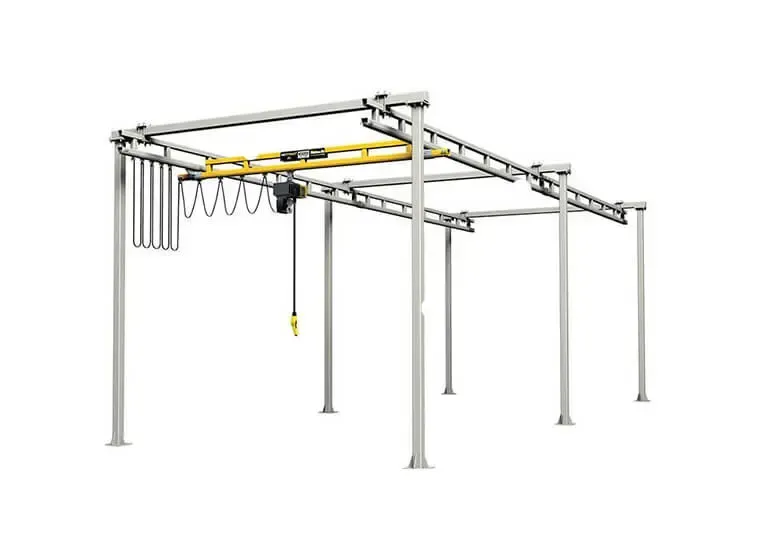
Overhead cranes consist of a bridge, hoist, trolley, and runway system. The bridge spans the work area, moving along elevated runways, while the hoist and trolley handle vertical and horizontal load movement. These cranes are categorized by design (e.g., single-girder, double-girder) and application (e.g., foundry cranes). Selecting the right crane type depends on factors like load capacity, span length, and environmental conditions.
Common Modes of Overhead Crane Operations
The effectiveness of overhead cranes hinges on selecting the appropriate operating mode for specific tasks. Each method offers unique advantages tailored to different industrial environments, load types, and safety requirements. Below, we delve deeper into the four primary modes of operation.
Pendant Control Systems
Pendant controls are handheld controllers plumbed to the crane by a cable. They let the operator run the crane from the floor while keeping a direct view of the load. Pendants are simple and rugged. They cost less than radio remotes and fit well where the operator works close to the lifting area. Buyers should weigh their workspace layout, operator habits, and safety needs before choosing a pendant.
1. Operation Mechanics
A pendant has clearly marked buttons or switches for hoist up and down, trolley travel, and bridge travel. Many units include an emergency stop and a dead-man or zero-speed switch that stops motion if the operator releases the control. Some pendants offer two-speed or proportional control for smoother lifts, while basic models provide simple on/off staging. The cable typically runs six to ten meters, but buyers can request custom lengths. Look for strain relief at the cable entry, robust connectors, and rated enclosures to match the working environment.
2. Applications
Pendant systems work well in small to medium shops and assembly lines where the operator stays near the load and needs tactile feedback from a handheld control. They are a good fit for predictable, repetitive lifts and facilities that do not require long walking paths or complex choreographed moves. Buyers who value low cost, easy training, and direct line-of-sight control often choose pendants over wireless systems. If your operation ever requires the operator to move away from the load or cover large outdoor yards, consider that a pendant may become limiting.
3. Limitations
The fixed cable restricts operator movement and creates a potential trip or snag hazard. Long cable lengths can tangle and wear faster. Ergonomic strain can occur during long shifts because the operator must hold the pendant continuously. Pendants also offer less flexibility for multi-operator workflows and are not suitable for environments where the operator must keep distance from the load for safety or visibility reasons. For very precise or remotely supervised lifts, a radio remote or pendant with proportional control will usually perform better.
4. Safety Considerations
Inspect the pendant cable and housing daily for frays, cuts, cracked insulation, or loose connectors and follow OSHA 1910.179 guidance for crane controls. Test emergency stop and dead-man functions before starting work. Use anti-slip gloves to maintain grip and avoid accidental activation. Make sure strain relief and cable routing prevent sharp bends and abrasion. Replace worn switches and damaged cables promptly, and require qualified technicians for repairs. Train operators to follow lockout/tagout procedures during maintenance and to never exceed the crane's rated capacity when using any control system.


Radio Remote Control Systems
Radio remote control systems let operators run a crane from a safe distance. They remove the physical limits of pendant cables. A good radio system makes lifts safer and work faster. It also makes the crane easier to place and use in tight or hazardous areas.
1. Operation Mechanics
Transmitters send coded commands to a receiver on the crane using radio bands such as 900 MHz or 2.4 GHz. Modern systems use encrypted signals and frequency-hopping or spread-spectrum methods to reduce interference and jamming. The receiver converts radio commands into electrical signals that interface with the crane's control valves, PLC, or motor controllers. Key features include an emergency stop that immediately cuts drive or applies brakes, signal strength indicators to show link quality, and anti-interference filters or shielding.
2. Applications
These systems work well wherever the operator needs freedom of movement. Foundries and chemical plants benefit because operators can stay clear of hot metal and fumes. Maintenance crews use remotes when working in confined spaces or when the cab has no clear view. Ports, fabrication shops, and recycling yards also adopt radio controls to improve visibility and speed while keeping personnel out of harm's way.
3. Advantages
Radio remotes let the operator pick the best vantage point for each lift. This improves load visibility and reduces the need for multiple spotters. They cut physical fatigue because operators are not tethered to a pendant. The absence of a trailing cable also reduces wear and downtime. Well-made systems add productivity through faster setup and simpler retrofits to existing cranes. Many remotes now include diagnostic readouts and status lights that help troubleshoot problems quickly.
4. Safety Considerations
Check batteries before every shift and carry spares. Low battery can cause signal loss and unsafe stops. Require a dead-man or constant-pressure control to ensure the crane stops if the operator releases the transmitter. Verify the system's fail-safe behavior on signal loss—brakes should apply or motion should stop. Keep firmware updated, inspect antennas and housings, and train operators on pairing, pre-start checks, and emergency procedures.
3. Cab-Operated Systems
Cab-operated systems put the operator up on the crane bridge in an enclosed or open station. This setup gives direct control and excellent sightlines on large jobs. Buyers choose cab operation when loads are heavy, moves are long, or visual judgment is key. Cab systems add cost and maintenance, but they raise precision and control compared with ground-based control in many heavy industrial uses.


1. Operation Mechanics
The operator steers the crane using joysticks, foot pedals, and a control panel that manage the bridge, trolley, and hoist. Modern cabs use proportional controls for smooth starts and stops. Many cabs include a deadman switch, emergency stop, and clear indicator lights for system status. Good cabs have adjustable seats, vibration isolation, and ergonomic layouts to reduce strain during long shifts. Communication links to ground personnel are standard. For some builds, cab controls integrate with limit switches, load moments, and anti-sway aids so operators can place loads more precisely.
3. Applications
Cab-operated cranes suit heavy industries where precision and continuous visual control matter. Shipyards, steel mills, foundries, and heavy fabrication shops rely on cab cranes to position multi-ton parts. They also work well in plants with long, frequent horizontal transfers where the operator needs to travel with the load. Buyers who run long production runs, handle awkward large pieces, or require real-time adjustments benefit most from cab operation.
4. Challenges
Cabs concentrate fatigue because operators sit high and often work long shifts. Fatigue can lower attention and increase error risk. The cab's location raises maintenance complexity; technicians need safe access to inspect controls, windows, and HVAC. Noise, vibration, and temperature extremes inside the cab can undermine comfort and performance if the cab is not properly insulated or climate-controlled. Cabs also add initial cost and slightly more downtime if cab-mounted systems require repair.
4. Automated and Semi-Automated Systems
Automation is revolutionizing overhead crane operations, particularly in high-volume manufacturing and warehouses.
1. Operation Mechanics
Modern automated grabs and cranes use PLCs to run programmed lift, travel, and dump sequences. Sensors give constant feedback — load cells measure weight, encoders track position, and proximity sensors prevent collisions. Variable-frequency drives and servomotors control smooth starts and stops. Human-machine interfaces let operators set recipes and monitor status.
2. Applications
Automation fits jobs with high repetition and tight tolerances. It is common in assembly lines where parts must land in the same spot every cycle. It also suits hazardous or restricted-access areas where you want to limit human presence. Warehouses and steel plants use semi-automated cranes for palletizing, sorting, and bulk transfer tasks.
3. Benefits
Automated and semi-automated systems improve placement repeatability and reduce human variability. They increase throughput with shorter, predictable cycle times. Automation lowers exposure to dangerous tasks and can reduce labor costs over time. It also creates useful data. Logged cycle times and error counts help track performance. That data supports continuous improvement and can reduce unplanned downtime.
Factors Influencing Mode Selection
Selecting the appropriate operating mode requires striking a balance between daily job requirements, cost, and safety. Think about the loads you lift most often. Think about the space your crane will live in. Think about rules you must follow.
1. Load Characteristics
The weight, shape, and fragility of your loads drive control needs. Large, heavy, or uneven loads demand strong, predictable motion and often benefit from steady, cab-operated systems or hydraulic-assisted controls. Fragile or irregular pieces do better with precise control — radio remotes or automated systems give finer movement and repeatable cycles. If you use special attachments, like magnets or orange-peel grabs, the control mode must work smoothly with those devices. When you buy, match the control accuracy and braking/sway features to the loads you handle most.
2. Workspace Layout
Physical space defines what controls work best. Low vertical clearance favors pendant controls or remotes over a cab. Narrow aisles and lots of obstructions make remote operation or automation safer because they remove the operator from blind zones. Long runway spans or high-cycle production lines often justify a cab so the operator stays close and comfortable for long shifts. Look at sightlines, maintenance access, and how operators move through the plant before you choose the mode.
3. Regulatory Compliance
You must meet applicable safety rules and inspection standards. For example, OSHA 1910.179 calls for audible alarms and emergency stops on cab-operated cranes. Many regions also require regular load testing, documented inspections, and certified operator training. Pick controls and safety add-ons that make compliance straightforward. Factor in the cost and time for training, record-keeping, and periodic inspections when you decide.
4. Cost-Benefit Analysis
The automation system is so efficient that one person can control several lifting systems at the same time. But the initial cost is high. In contrast, manually controlled cranes have a lower upfront cost, but are relatively easier to maintain. However, in high-volume or hazardous lifting operations, automated systems can do a lot for you by reducing downtime and accidents.
Yuantai Overhead Crane


Overhead Crane Operation Safety Rules
Safety is paramount in crane operations. According to the U.S. Bureau of Labor Statistics, crane-related incidents account for approximately 4,000 workplace injuries annually, with improper operation being a leading cause. Below are essential safety measures:
Pre-Operational Checks
The first line of defense against mishaps and unplanned downtime is pre-operational inspections. These inspections verify that the crane and its safety features operate as planned. Additionally, they indicate whether the machine is suitable for the site and the needs of the buyer. When assessing a crane for purchase, request inspection records.
1. Inspect Equipment
Look closely at hooks, latches, wire ropes, sheaves, bearings, brakes and limit switches for signs of wear or damage. Check for bent hooks, cracked welds, corrosion, broken wire strands, flattened or grooved rope, and loose or worn pins. Test brakes for consistent stopping and listen for unusual noises when the crane moves. Verify limit switches function across their full range. Also check labels, nameplates and inspection tags.
2. Verify Load Capacity
Be sure to know your actual lifting weight to choose the right lifting capacity. But the capacity of the crane will also vary depending on the configuration. In addition to this the effects of wind, emergency stops and shock loads need to be considered. If available, you can apply a moment indicator or load cell. Yuantai cranes also offer load cells, which you can purchase when you buy a crane.
3. Clear the Work Area
Make sure the load path is free of people and obstacles before lifting. Establish a clear exclusion zone beneath and around the lift. Use barriers, signage, and a trained signal person or spotter to control access. Remove loose debris, stacked materials and any tripping hazards from travel routes. Keep a safe distance from electrical wires and look for any obstacles above. Make sure the floor or ground can sustain the crane and its loads. Risk is decreased by clear marks and effective communication. Make sure the crane will fit and function securely in the workspace you intend to use before purchasing it.
During Operation
During operation, the focus must be safe, steady, and predictable crane work. Operators should move loads deliberately. The goal is to protect people, the load, and the equipment while keeping the job on schedule. Good technique reduces wear and downtime.
1. Smooth Movements
Avoid abrupt starts or stops. Sudden motion makes the load swing and increases the risk of damage or a dropped load. Follow the Crane Manufacturers Association of America guidance and accelerate and decelerate gradually. Use the crane's two-speed or variable-speed controls when available. Keep the hoist line vertical and lower the load close to its travel path. If a swing starts, stop and re-center before moving again. Smooth handling also reduces shock to hooks, pins, and ropes, which lengthens service life and cuts maintenance costs.
2. Maintain Communication
Keep lines of communication open at all times. Use standardized hand signals when a signal person is required. Use two-way radios when the operator cannot see the load or spotter. Agree on an emergency stop phrase before work begins. Have one designated signal person for each lift when conditions are complex. Confirm every critical command so there's no doubt about intent. Clear, short messages prevent mistakes and keep lifts coordinated and safe.
3. Monitor Environmental Factors
Watch the weather and site conditions continuously. Wind gusts, rain, ice, and lightning affect load stability and operator visibility. High heat can affect hydraulic systems and reduce operator alertness. Cold and ice can stiffen ropes and controls. If conditions change, lower the load to a safe area, secure the crane, and inspect equipment before resuming work.
Post-Operation Protocols
After a shift ends, follow a clear post-operation routine. This routine protects workers and the crane. It also preserves equipment life and keeps warranty and service records accurate.
1. Secure the Crane
Position the hoist at the designated storage point and disconnect power sources. Lower the hook to the safe, marked resting height and remove any load attachments. Lock out and tag out electrical and hydraulic supplies per your site rules to prevent accidental startup. Stow pendant controls and remote transmitters in a dry, secure place. Inspect visible moving parts and clean away debris or loose material that could cause wear. Record the crane's parked condition in the equipment log so you and your maintenance team know it was left ready for service.
2. Report Malfunctions
Document any irregularities, such as unusual noises or control lag, for immediate maintenance review. Note the time, operator, and a clear description of the symptom. Take photos or video if that helps show the issue. Tag the machine “out of service” when a problem could affect safety or load control. Forward the report to your maintenance team and keep a copy with the daily log for warranty and inspection records. Quick, clear reporting speeds repairs and lowers the risk of costly downtime or bigger failures.
Maintenance: Extending Equipment Lifespan
Routine maintenance keeps your crane working and helps avoid surprise downtime. Frequent maintenance increases service life and reduces repair costs. Before making a purchase, inquire with vendors about available maintenance assistance, spare parts, and service intervals.
1. Lubrication
Keep bearings, gears, wheels, and pins properly lubricated to cut friction and wear. Check grease points on a schedule and after heavy use or washdowns. Watch bearing temperatures and listen for unusual noises — both are early signs of lubrication problems. Record every lubrication event in a simple log. That history helps you spot trends and plan parts replacement before a failure.
2. Wire Rope Inspection
Inspect wire rope often and document what you find. Look for broken strands, kinks, corrosion, flattening, and rotten or hard spots. Never ignore visible damage; small faults grow fast under load. Follow the ASME guidance for inspection intervals and replacement triggers, and ask your supplier for the rope's rated life and traceability. If you see abnormal wear, stop using the rope and replace it with the right specification for your crane and duty cycle.
3. Alignment Checks
Misaligned runways or bridges create uneven wear and increase the load on motors and bearings. Check alignment at regular intervals and after any heavy impact, rebuild, or movement of the runway. Use precise tools, such as laser alignment devices, for the best results. When you find misalignment, correct it quickly by adjusting rail fasteners, shims, or end stops. Proper alignment improves travel smoothness and reduces long-term maintenance costs.
4. Standards and Evidence of Benefit
Following ASME standards and a steady maintenance program delivers measurable gains. Companies that followed ASME maintenance practices saw far fewer equipment failures than those with irregular care. Require inspection records, a maintenance schedule, and a plan for spare parts as part of any purchase. This lowers the total cost of ownership over the crane's lifetime and helps safeguard uptime.
Conclusion
The operation of overhead cranes involves a number of aspects, and you need to strictly follow the safety rules and choose the right operation method. Only in this way, you can make the crane more safe and efficient operation.