- Nov 17, 2025
- News
What Type of Crane is Used in Warehouses?
Warehouse cranes are essential tools for various lifting and handling tasks within a warehouse, and there are many different types of warehouse cranes.
A warehouse, as a building for storing and keeping goods, usually requires frequent handling of items to complete tasks efficiently. Warehouse cranes can safely and steadily move various heavy or large cargo and are common equipment for warehouse handling. This article mainly takes Yuantai Crane as an example to introduce the commonly used types of cranes in warehouses and the considerations for selecting the right crane type for warehouse applications.
Introduction to Warehouse Cranes
In a warehouse, moving inventory efficiently and accurately is vital for maintaining productivity. Cranes provide the ability to lift, position, and transport heavy goods, reducing reliance on manual labor and enhancing safety. Various crane types, such as Overhead Cranes, Gantry Cranes, and Jib Cranes, are employed in warehouses, each with distinct advantages based on the warehouse layout, load requirements, and specific operational needs.

Primary Crane Types Used in Warehouses
The primary crane types used in warehouses are selected based on space availability, load-bearing capacity, and frequency of use. Here, we explore the different crane types commonly employed in warehouses, detailing their specific applications and suitability.


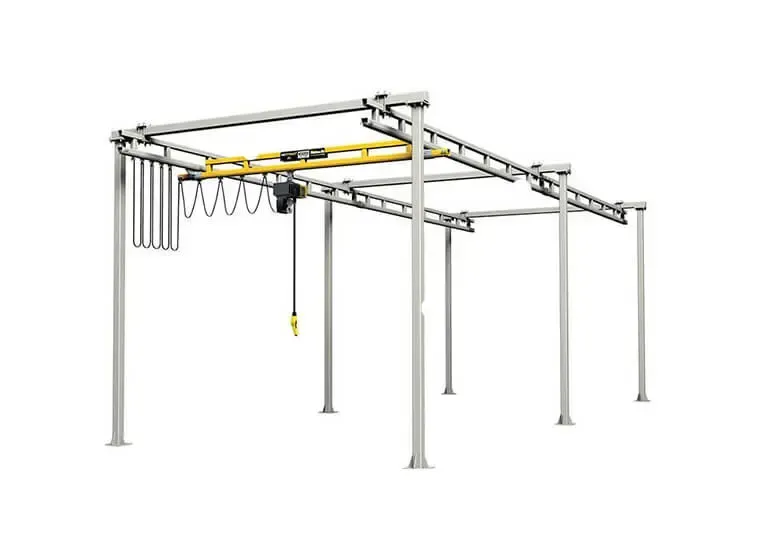
Overhead Cranes
Overhead cranes are essential tools for any warehouse that deals with heavy or bulky materials. They make lifting and moving items safer, faster, and more efficient. Choosing the right crane can save you time, reduce workplace injuries, and improve overall productivity. Whether you handle light loads or heavy goods, there's an overhead crane that fits your warehouse's needs and space.
1. Single Girder Overhead Crane
A single girder overhead crane is a cost-effective solution for light to medium loads. It has one bridge beam with a hoist attached, which moves along the beam to lift and transport materials. This design is simple, reliable, and easy to maintain, making it a popular choice for many warehouses. If your operations involve moderate lifting needs, this crane gives you dependable performance without overcomplicating your setup. It also requires less structural support, which can lower installation costs.
2. Double Girder Overhead Crane
double-girder overhead cranes feature two parallel bridge beams. This allows them to lift heavier loads and cover larger spans than single girder cranes. They are perfect for warehouses that handle high-capacity goods or oversized items. Beyond their strength, double girder cranes offer flexibility: you can add walkways, service platforms, or other attachments to support specialized operations. If your warehouse grows or your lifting needs increase, this crane can adapt, giving you long-term value and robust performance.
3. Underslung Cranes
Underslung cranes hang from the ceiling, which makes them ideal for warehouses with low ceilings or unusual layouts. Because they don't require large supporting structures on the floor, they help maximize usable space. These cranes are versatile and efficient for handling various lifting tasks. If your warehouse has limited headroom, an underslung crane provides a smart solution without requiring costly structural changes.
4. Workstation Overhead Cranes
Workstation overhead cranes are designed for precise, repetitive tasks in confined areas. They allow you to lift, position, and transport materials directly within a workstation, improving workflow and safety. These cranes are excellent for assembly lines, production cells, or areas where materials need careful handling. By bringing the crane to the point of work, you can reduce manual labor, increase efficiency, and keep your team safer.
Gantry Cranes
Overhead cranes are essential equipment for any warehouse handling heavy or bulky materials. They help you move large items quickly, safely, and efficiently across the facility. Using an overhead crane can reduce manual labor, prevent damage to goods, and improve workflow. Choosing the right type of crane depends on the size of your warehouse, the weight of your loads, and how frequently you need to lift and transport items. With the right crane, you can boost productivity and ensure a safer working environment for your team.


1. Double Girder Gantry Crane
With two main beams, this crane is built for heavy-duty lifting. If you often move large containers, machinery, or oversized materials, a double girder design offers the strength and stability you need. It spreads the load evenly, making it reliable for high-capacity operations. Warehouses and storage yards with wide open spaces benefit most from this design, as it can cover large areas and handle frequent, heavy lifting.
2. Single Girder Gantry Crane
Single-girder gantry cranes are lighter and more compact. They are perfect if your warehouse handles moderate loads and you want a cost-effective solution. Despite their simpler design, they remain reliable for day-to-day tasks. Their installation is easier and requires less overhead space, which makes them ideal for smaller facilities or areas where heavy lifting is occasional rather than constant.
3. Semi-Gantry Cranes
These cranes combine a full gantry on one side with a fixed support on the other. This design is ideal if your warehouse has narrow aisles or structural limitations. Semi-gantry cranes give you flexibility, allowing you to lift and move materials where a full gantry might not fit. They are often used in specialized areas where space is tight but lifting needs are still significant.
4. Portable Gantry Crane
Portable gantry cranes are mobile and adjustable, making them versatile for different lifting tasks within the warehouse. If your operations require frequent repositioning of the crane or temporary lifting setups, this type is a smart choice.
Jib Cranes
Safety and efficiency are essential when managing a warehouse. Jib cranes are an excellent solution for lifting and moving materials quickly. They are compact, versatile, and can handle a wide range of loads. Whether you are managing assembly lines, repair stations, or storage areas, choosing the right jib crane can save you time and reduce workplace strain. These cranes are designed to make material handling easier, even in tight spaces, without needing a full overhead crane system.


1. Pillar Jib Crane
Mounted on a free-standing pillar, pillar-mounted jib crane offer 360-degree rotation. This makes them perfect for handling materials within a localized area. If you have an assembly or repair station in your warehouse, a pillar jib crane allows you to lift, move, and position items with minimal effort. They are sturdy, easy to install, and provide a reliable lifting solution in areas where flexibility and accessibility are important.
2. Mobile Jib Crane
Mobile jib cranes give you the freedom to move lifting capabilities to different locations in your warehouse. They are ideal if you frequently need to relocate heavy items or don't have a fixed workstation. With wheels or tracks, mobile jib cranes can be repositioned without complicated setup, saving you both time and labor. They provide versatility while maintaining the safety and lifting capacity of traditional jib cranes.
3. Wall-Mounted Jib Crane
Installed directly on walls or structural columns, wall-mounted jib cranes offer lifting support without taking up valuable floor space. This makes them practical for warehouses where space is limited. If you want to keep your work areas clear for storage or movement, a wall-mounted jib crane is a great choice. They can cover smaller areas efficiently and are often easier to install than floor-mounted alternatives.
4. Wall-Travelling Jib Crane
Wall-travelling jib cranes can move horizontally along a wall-mounted track, covering a much larger area than a fixed jib crane. They are particularly useful in warehouse production lines, where materials must be transferred over longer distances. By combining horizontal travel with lifting capabilities, wall-travelling jib cranes provide flexibility and improve workflow efficiency. They allow you to manage multiple stations without needing additional lifting equipment.
Key Considerations for Choosing a Warehouse Crane
When selecting a crane for warehouse use, several important factors can determine whether your investment will meet your operational needs effectively. Choosing the right crane is not just about lifting heavy loads—it's about improving workflow, maintaining safety, and ensuring long-term reliability. If you are looking to purchase crane equipment, knowing these factors will help you pick the right crane.
1. Load Capacity
Different cranes are built to handle different amounts of weight. Before making a decision, take a close look at the heaviest items your warehouse needs to move. Selecting a crane that matches or slightly exceeds your maximum load ensures smooth operations without risking equipment damage or accidents. Remember, a crane that is underpowered for your loads can slow down work and create safety hazards.
2. Warehouse Layout
Your warehouse's design plays a major role in deciding which crane type will work best. Overhead cranes are perfect for facilities with high ceilings and open spaces, allowing you to move heavy items across long distances efficiently. For warehouses with lower ceilings or tighter layouts, underslung or jib cranes provide flexibility and maneuverability without interfering with your existing structures. Choosing a crane that fits your physical space ensures better workflow and reduces potential obstructions.
3. Frequency of Use
How often you plan to use the crane will affect the type you should choose. If your warehouse relies on lifting equipment throughout the day, you need a crane built for continuous operation. High-duty cycle cranes are designed to withstand frequent use without overheating or breaking down. On the other hand, if your lifting needs are occasional, a standard-duty crane may be more cost-effective.
4. Safety Requirements
Safety is critical in any warehouse operation. Certain environments demand specialized cranes. For example, warehouses handling flammable or volatile materials require explosion-proof cranes to prevent accidents. If your facility works primarily with metallic goods, electromagnetic cranes can increase efficiency and reduce manual handling. Evaluating the hazards and safety regulations in your warehouse will ensure your crane protects both workers and inventory.

Safety and Efficiency Practices in Crane Operations
Adhering to safety and efficiency practices during crane operations can increase your productivity and reduce the risk of accidents. Cranes are powerful and efficient pieces of equipment, but they can also pose a safety risk if not properly maintained.
1. Regular Maintenance
Routine inspections and maintenance keep your crane running smoothly. Checking mechanical components, hydraulic systems, and electrical connections prevents breakdowns and prolongs the life of your equipment. Even small issues, if ignored, can lead to costly repairs or dangerous situations on the job site. By staying on top of maintenance, you ensure consistent performance and safety.
2. Operator Training
Qualified operators are essential for safe crane operations. Training should cover proper handling techniques, load control, and emergency procedures. Experienced operators know how to respond quickly to unexpected situations, reducing downtime and preventing accidents. If you're considering buying a crane, ensure that operators are trained for your specific model and the type of work you'll be performing.
3. Load Limit Adherence
Following load limit guidelines is critical to prevent overloading. Exceeding a crane's capacity can damage its structure and lead to serious safety risks. Understanding the weight and balance of each load protects both your equipment and your crew. Always refer to the manufacturer's load charts and never take shortcuts.
4. Safety Features
Modern cranes come with features designed to improve both performance and safety. Load limit indicators, anti-sway controls, and emergency stop systems are examples of technology that make lifting operations more precise and secure. Investing in a crane with advanced safety features gives you peace of mind and helps your team work more efficiently.
Conclusion
Cranes are indispensable in warehouse environments for efficient material handling and safe load management. The choice of crane—whether it be an overhead, gantry, or jib crane—depends on factors such as load capacity, warehouse configuration, and operational requirements. Yuantai Crane offers an extensive selection of cranes designed to meet diverse warehouse needs, from heavy-duty gantry cranes for outdoor applications to compact jib cranes for workstations.