- Jan 03, 2025
- News
What is a Crane Kit? Yuantai Crane kit for Sale
Yuantai Crane, with over 10 years of experience, provides customizable bridge crane kits known for efficiency and reliability.
A crane kit comprises all necessary components to assemble a fully operational overhead crane, including options for single or double girder configurations. Our kits are designed in compliance with international standards such as ISO and FEM, ensuring quality and interoperability. These kits are designed to simplify the construction process, offering standardized parts that can be customized to meet specific requirements. Crane kits are a go-to solution for industries that need flexible and cost-effective lifting equipment. They eliminate the need for sourcing individual components from multiple suppliers, streamlining the procurement process and ensuring compatibility across parts.


Key Components of a Crane Kit
Crane kits include a variety of components that together make up a reliable crane. If you need a crane kit, we can customize your crane to fit your facility. A quality kit can combine strength, safety, and durability.
1. Hoist
The hoist is the lifting heart of the system. You can choose electric wire-rope, electric chain, or manual hoists; each type suits different capacities and cycle rates. Important subcomponents include the motor, gearbox, drum or sprocket, brake, hook block, and limit switches. Look for features such as overload protection, thermal protection, variable speeds, and duty-cycle ratings that match your operation. Mounting options vary—trolley-mounted for bridge travel, fixed for gantries, or low-headroom designs when clearance is tight. Regular inspection points are the brake performance, rope or chain wear, lubrication, and safe hook latch function.
2. End Carriages
End carriages support the bridge and move it along the runway. They consist of wheels, wheel bearings, drives, wheel frames, and often braking systems. Wheel material and profile must match the runway rail type and loads to avoid premature wear or rail damage. Drive choices include geared motors with reducers or direct-drive motors and may be paired with variable frequency drives for smooth starts and stops. Look for adjustable wheelbase or alignment features, travel limit switches, and anti-skew measures to keep the bridge tracking true. Life is prolonged and motion is maintained with proper installation and routine bearing inspections.


3. Bridge Girder
The bridge girder is the main structural beam that carries the hoist and load between end carriages. Bridges come as single-girder or double-girder layouts and use box, plate, or I-section designs depending on span and load. Key design factors include span length, rated load, allowable deflection, and connection details for the hoist trolley and end carriages. Reinforcements such as stiffeners, end-plate gussets, and properly welded seams reduce stress concentrations. In hostile settings, corrosion treatments and protective coatings are important. Selecting the right girders reduces deflection, increases safety, and lays the groundwork for dependable operation.
4. Control Systems
Control systems let an operator move the hoist and crane safely and accurately. Common interfaces are pendant stations, radio remote controls, and fixed operator cabins for larger cranes. Modern controls use PLCs, proportional joysticks, and soft-start or variable speed drives to smooth motion and reduce shock loads. Safety features include emergency stop, dead-man or maintained-press functions, interlocks, and anti-two-block protection. Good systems include clear labeling, ingress protection for dust and moisture, and diagnostic feedback for faults.
5. Electrical Components
Electrical components power the hoist and control systems and manage protection and distribution. Typical kit items include main control panels, contactors, motor starters, overload relays, variable frequency drives, limit switches, terminal blocks, and wiring harnesses. Power delivery options cover festooned trailing cables, insulated conductor bars, or rigid bus systems—each has tradeoffs in cost, maintenance, and travel length. Proper grounding, correct fuse and breaker sizing, and enclosure IP ratings are essential for safe operation. Labeling, wiring diagrams, and spare fuses or contactors simplify maintenance and troubleshooting.
6. Optional Accessories
Optional accessories let you tailor the crane to specific tasks and safety needs. Common add-ons include load cells or scales for weighing, load-limiters and load-indicators, anti-sway systems, variable speed drives for precise positioning, and anti-collision sensors for fleets. You can add end stops, warning lights, horns, cabin heating, work lights, and service platforms for maintenance. Certifications, spare parts kits, and installation hardware also often appear as optional packages. Choose accessories that improve safety, reduce cycle time, or make the crane easier to maintain.
Applications of Overhead Crane Kits
Overhead crane kits are pre-engineered systems made of tracks, end trucks, hoists, trolleys and mounting hardware. They let businesses lift and move heavy loads safely and with precision. Kits come in many capacities and configurations. Compared to custom cranes, they install more quickly. They cut down on handling time and manpower requirements. They also shield products from harm and increase worker safety.


1. Manufacturing
In factories, crane kits move raw materials, work-in-progress and finished goods between stations. They handle heavy dies, molds, presses and machine parts that are hard to move with forklifts. Kits can run above production lines to speed flow and reduce floor congestion. They allow precise placement for assembly and welding tasks. Integrated hoists and programmable travel improve cycle time and repeatability. Many manufacturers choose explosion-proof or washdown options for special environments. Routine maintenance is straightforward because kits use standardized parts.
2. Warehousing
Overhead kits simplify the storage and retrieval of large goods in warehouses. They lift pallets, drums and long loads into high racking without blocking aisles. Overhead travel reduces forklift traffic and lowers the risk of collisions. Portable gantry-style kits add temporary lifting where fixed systems are not practical. Kits can be paired with conveyors and loading docks to streamline inbound and outbound flows. This will not only increase the efficiency of your warehouse's stocking, but also make material picking safer and faster.
3. Construction
On construction sites, modular crane kits help lift structural elements, precast panels and service modules. They work well for short-term jobs because crews can assemble and take them down quickly. Mobile gantries and rooftop-mounted kits provide flexibility on tight sites. Rugged finishes and weatherproof components meet outdoor demands. Kits reduce the need for large tower cranes for lighter repetitive lifts, saving time and cost during building assembly and interior fit-out.
4. Automotive
Automotive plants use crane kits for engine handling, trim line operations and die changes. Overhead systems deliver heavy subassemblies exactly where robots or workers need them. This supports just-in-time material flow and rapid line changeovers. Ergonomic lifting fixtures lower worker strain during repetitive tasks. Kits also enable quick reconfiguration of lines for different models and simplify tooling exchanges during maintenance or production shifts.
5. Modular nature and adaptability
The modular design of crane kits makes them highly adaptable to changing needs. You can choose single- or double-girder layouts, different span lengths and a wide range of lifting capacities. Standardized components let you scale the system later or swap parts without major downtime. Kits retrofit into existing buildings with minimal structural work. They support modern controls like pendant stations, radio remotes and sensor add-ons for overload protection.
Yuantai Overhead Crane


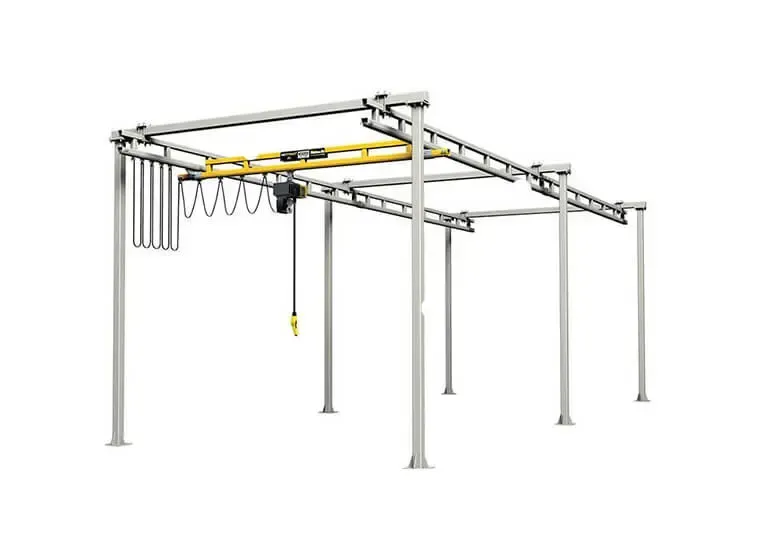

Benefits of Using Crane Kits
Crane kits are a quick and practical lifting solution. Their main structural components, hoists, skids and controls etc. provide you with a reliable lifting system. Kits are suitable for small factories, maintenance shops and other applications.
1. Cost-Effectiveness
Crane kits help reduce overall project costs by eliminating the need for extensive custom fabrication. They also cut down on procurement time, as all essential parts are bundled and readily available.
2. Ease of Installation
Kits come with pre-engineered frames, connections, and matched hardware so installers follow clear steps. That reduces on-site fitting, welding, and complex measuring. Fewer surprises on the shop floor mean the crane is ready for testing and commissioning sooner.
3. Customizability
Although standardized, most kits let you change span, lift height, and rated capacity within defined ranges. You can pick different hoists, trolleys, and control options to match your load profile and workflow. Modular end trucks and extension pieces make it easy to adapt the same base kit for different bay widths or loads. This mix of off-the-shelf reliability and configurable elements gives you flexibility without the cost of a one-off design.
4. Reliability and Durability
Components in quality crane kits are engineered to industry standards and undergo factory tests before shipment. We often specify steel grades, surface treatments, and fatigue-rated parts to resist wear in industrial settings. With proper maintenance, these systems deliver long service life and consistent uptime. Standardized parts, finally, speed up diagnostic checks, streamline inspections, and expedite repairs when necessary.

Yuantai Crane Kits for Sale
Yuantai offers a range of crane kits tailored to meet diverse industrial requirements. Yuantai's cranes have been developed and improved over the years and are more than capable of handling demanding lifting tasks for a wide range of applications.
Features of Yuantai Crane Kits
Yuantai builds crane kits to give you flexible, reliable lifting solutions. They fit both single-girder and double-girder layouts, so you can pick the right size for a small workshop or a large yard and match the span and rated capacity you need. Each kit uses high-quality parts: your choice of electric wire-rope or chain hoists, precision-machined end carriages and trolleys, durable rails, and proven control options like pendant or radio. Parts come pre-fit and tested to cut down on onsite work and help your installation go faster. Safety is integral: overload limiters, anti-collision devices, travel limit switches, motor thermal protection, and emergency stops work together to protect operators and gear. Yuantai also offers customization and factory testing so the kit matches your lifting profile and local rules. If you want help choosing the best configuration, we'll walk you through capacities, hoist types, and controls so you get the right kit for your job.
Why Choose Yuantai?
Yuantai is a crane manufacturer from China, where the crane industry has also seen tremendous growth in recent decades. Yuantai Crane has decades of production experience, and our cranes have been sold all over the world. And we have been supported by many customers. Whether you are looking for an overhead crane kit or other lifting needs, Yuantai can provide you with a customized solution based on your needs.
Factors to Consider When Selecting a Crane Kit
Choosing the right crane kit starts with a clear picture of the job. Think about what you will lift, how often you will lift it, and where the crane will work. Match the kit to your workspace, your power supply, and your long-term plans. Factor in safety rules, installation needs, and who will maintain the equipment.
1. Load Capacity
First you need to know the maximum lifting capacity that the crane needs to lift. Take into account any dynamic forces from beginning, pausing, or swinging the load in addition to the rated (static) weight. Take note of the shape and center of gravity of the load; awkward or off-center loads require unique spreaders or larger capacity. Check the hoist's rated capacity, trolley and bridge strength, and hook block limits.
2. Span and Height
Measure the workspace width and the clear vertical space from floor to lowest obstruction. The span determines bridge length and wheel loads on runway beams. Headroom and under-hook height affect whether you choose single-girder or double-girder designs and which hoist type fits. Account for runway support points and beam deflection over long spans. Check for obstructions such as lights, ducts, or cranes on adjacent rails. If mobility or temporary installation matters, consider gantry or portable options that change span and height with minimal site work.
3. Power Requirements
Confirm the facility's available voltage, phase (single or three), and frequency. Connect the hoist controls and crane motor to that supply. Verify the motor's starting current and determine if soft starters or VFDs are required at the location to avoid voltage dips. Choose from a pendant, trolley, or radio remote for the control power and interface. Look at battery or generator possibilities for areas lacking reliable mains electricity. In addition, make plans for surge protection, grounding, and energy-saving elements like efficient motors or regenerative drives.
4. Frequency of Use
Classify how often the crane will run and at what load levels. Occasional, intermittent, and continuous service require different duty ratings and component grades. For high-cycle or 24/7 work, pick industrial-grade hoists, heavy-duty bearings, and higher service factors. Plan a maintenance schedule that matches usage: daily checks for busy sites, weekly or monthly checks for lighter use.
5. Custom Features
List any special requirements up front so the kit can be tailored. Consider variable speed drives for smoother lifts, anti-sway or positioning aids for precision work, and load-moment or overload indicators for safety. For hazardous areas choose explosion-proof motors and certified components. Add weatherproofing or higher IP ratings for outdoor use. Modern options include remote diagnostics, IoT monitoring, and safety interlocks.
Conclusion
Crane kits represent a practical and efficient solution for industries seeking to enhance their material handling capabilities. By offering standardized components that can be tailored to specific needs, these kits simplify the installation and operation of overhead cranes.